
Beyond Service - The APS Method
A Framework Adapted to Your Business—not a Formula Forced Upon It
The APS Method focuses on five connected pillars that help equipment manufacturers build sustainable, customer-focused, and profitable aftermarket organizations.
The framework provides structure, but how it is applied depends entirely on your organization.
APS considers your company’s size, equipment, installed base, customer expectations, people, systems, capabilities, and growth objectives.
Pillar 1
Strategy
Develop an aftermarket direction aligned with your business objectives, resources, market position, and customer expectations.
Pillar 2
Service
Build service processes that reflect your equipment, technician capabilities, installed base, response requirements, and customer commitments.
Pillar 3
Spare Parts
Create a parts strategy based on product lifecycle, inventory needs, customer urgency, pricing, margins, and operational capabilities.
Pillar 4
Customer Experience
Design customer interactions around the experience your organization promises and the expectations of the markets you serve.
Pillar 5
Profitability
Develop measurements, pricing, processes, and commercial discipline that support sustainable growth without compromising customer trust.
The APS Method provides the framework. Your business determines how that framework should be built.
BEYOND SERVICE - THE APS METHOD
Coming Soon
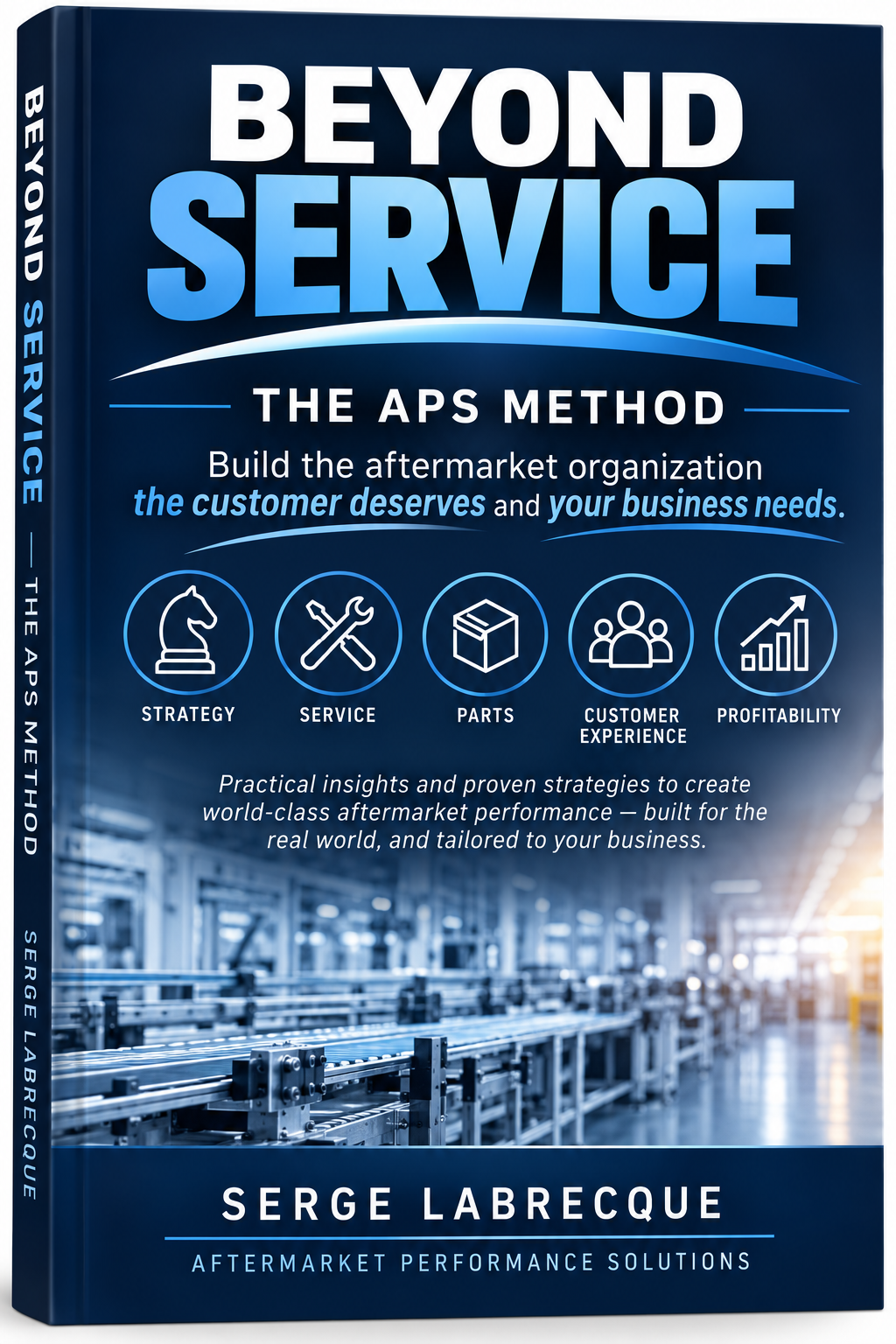
Building the Aftermarket Organization Your Customers Deserve and Your Business Needs
Many organizations try to improve aftermarket performance by copying competitors, following generic best practices, or implementing systems designed for companies with entirely different needs.
But a successful aftermarket organization cannot simply be copied.
It must be built around the equipment, customers, people, systems, culture, resources, and ambitions of the business it serves.
Beyond Service – The APS Method provides a practical framework for leaders who want to transform aftermarket from a necessary support function into a strategic source of customer loyalty, competitive advantage, and profitability.
The book does not present one organizational model or universal answer.
It provides the principles, questions, tools, and structure needed to build the aftermarket organization that is right for your business.